
Culture
Berat, the "City of a Thousand Windows" — What to See
Emma ThompsonMar 5, 20269 min read
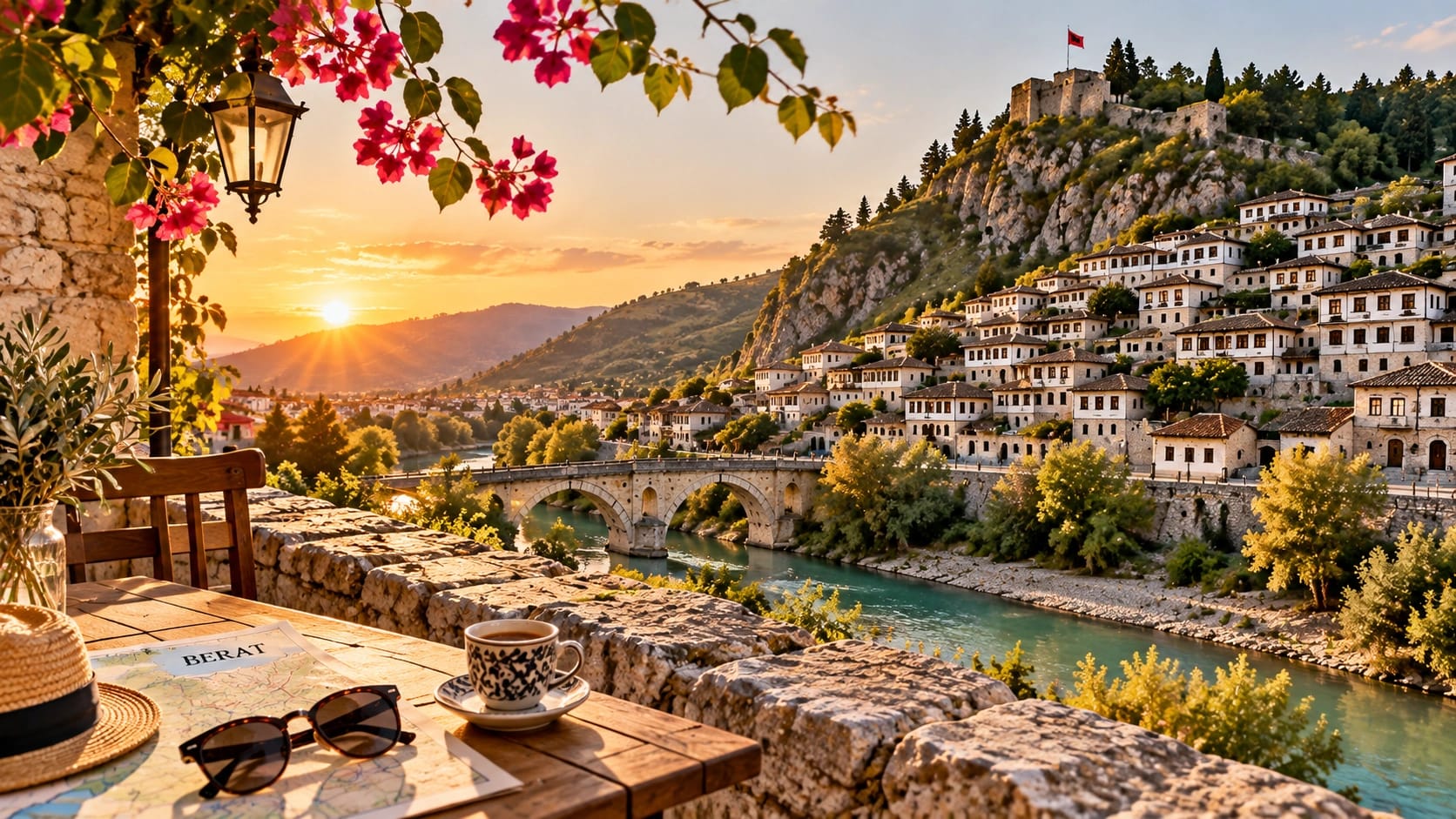
I got my first look at Berat the way most people do, which is to say by accident, rounding a bend in the road with the light already going gold, and having to actually pull over because what was in front of me didn't look entirely real. An entire hillside of pale Ottoman houses, stacked one above the other in tight rows, hundreds of dark window frames catching the last sun at once, like the whole slope had been built specifically to be looked at from exactly that angle at exactly that hour. It's the kind of first impression a place rarely lives up to on closer inspection. Berat is one of the rare ones that does.
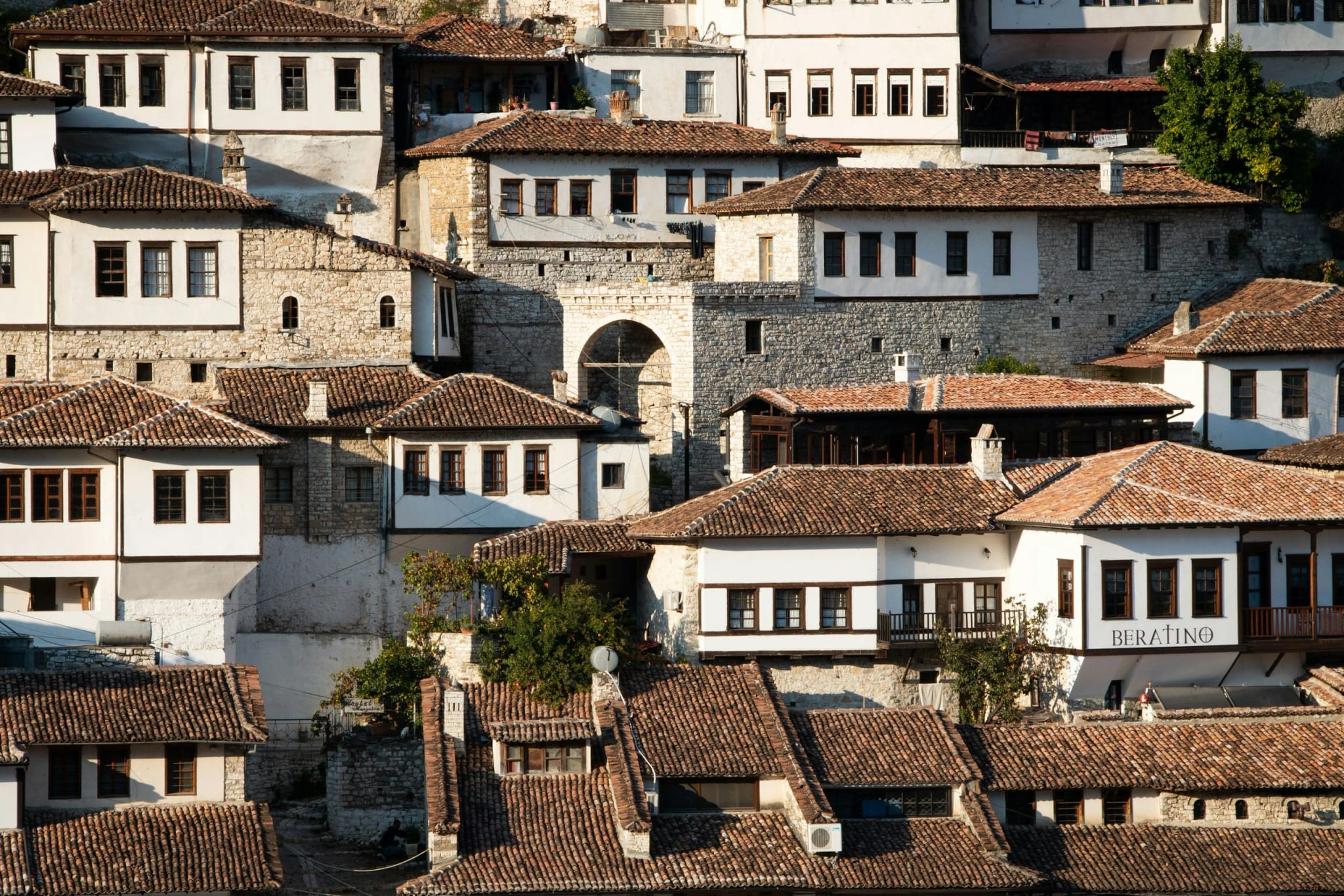
The nickname, "the city of a thousand windows," comes directly from that hillside, a quarter called Mangalem, where the Ottoman-era houses were built with unusually large, closely set windows stacked so tightly up the slope that from a distance they blur into exactly what the name promises. Walking up through Mangalem itself is a different experience than looking at it from across the river — narrow stone lanes, steep enough that you'll feel it in your legs, opening occasionally onto small squares with a café table or two, the Bachelors' Mosque and the King's Mosque sitting near the base of the hill as a reminder that this was, for centuries, a genuinely mixed Ottoman city rather than the postcard version of an old town it can look like from a distance.
Keep climbing and you reach the castle, and this is the part of Berat that actually surprised me the most the first time, because I'd expected a monument and got a neighborhood instead. People still live inside Berat's castle walls — actual families, actual homes, laundry lines strung between old stone buildings, a couple of small hotels and restaurants operating right alongside the residences. There are Byzantine churches tucked into the grounds, one of them now home to the Onufri Museum, a small but genuinely striking collection of icons by Onufri, a sixteenth-century Albanian painter whose use of a very particular, luminous shade of red is apparently distinctive enough that art historians can identify his work by it alone. I'm not an icon person by inclination and still found myself standing in front of a few of these for longer than I'd planned. Give yourself real time up there — not just for the museum, but to walk the walls themselves, because the view back down over Mangalem's rooftops and the river below is, without much competition, the best panorama in the city.
Come back down and cross the river, and Berat quietly changes register. Gorica, the quarter on the opposite bank, has its own stretch of the same window-heavy Ottoman houses but a noticeably slower, more residential feel, connected to Mangalem by a stone pedestrian bridge that's become one of the more photographed spots in the city for good reason — from the middle of it, you get both hillsides at once, the castle above one and the quieter rooftops of Gorica below the other. I tend to end up in Gorica in the early evening, when the day-trippers have mostly drifted back toward Mangalem's restaurants and the streets empty out into something closer to what I imagine the whole town felt like a generation or two ago.
And then there's the wine, which nobody warns you about before you arrive and which I now consider unfinished business if you leave Berat without trying. This whole valley has been producing wine for a very long time, and the Çobo Winery just outside town has become the name most visitors end up hearing, largely on the strength of their dry white, E Bukura e Beratit — "the beauty of Berat" — made from a local grape variety you won't easily find bottled anywhere else. I've sat through more than one long, slow dinner in Mangalem with a bottle of it and a plate of local cheese and felt no particular urgency to be anywhere else, which is, in the end, roughly the whole argument for spending a proper night in this town rather than treating it as a lunch stop on the way to somewhere else.
“Most castles you visit are ruins you're asked to imagine as alive. Berat's is the opposite problem — you have to remind yourself it's also, technically, a monument, because someone is hanging laundry out to dry two doors down from the Byzantine church.”
If you've got an extra day and want to stretch beyond the old town, the Osumi Canyons are close enough for a genuinely good half-day trip — a dramatic, narrow river gorge carved into pale rock, popular with rafters in spring when the water's higher, and a good enough reason on its own to add one more night to a Berat stop that a lot of itineraries shortchange to a rushed few hours. But even without the canyon detour, I'd tell anyone planning a quick in-and-out to reconsider: Berat is one of those towns that looks fully absorbed in twenty minutes from a viewpoint and takes considerably longer to actually understand once you're inside it, walking its lanes instead of photographing them from across the river. Autumn, when the crowds thin and the light turns even more flattering than usual, is when I've had my best days here, but honestly, I've never had a bad one.
Travel it with a local team
Tours that cover this
Albania’s Historic Gems
Eight days through 2,500 years of Albanian history: Skanderbeg's Krujë, Roman Durrës, the UNESCO towns of Berat and Gjirokastër, the ancient cities of Butrint and Apollonia, and the Blue Eye spring, at a comfortable pace in any season.
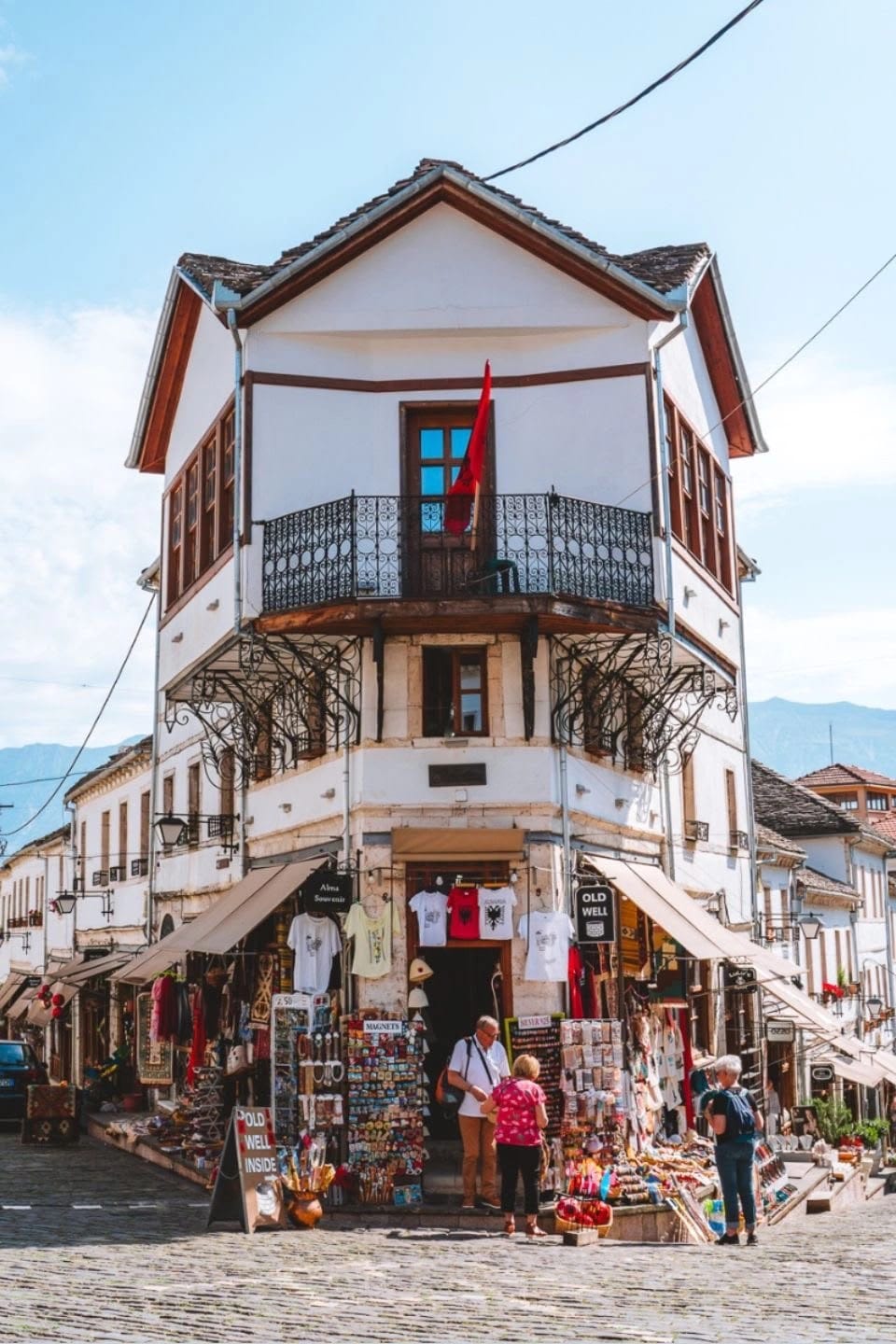
Albanian Authenticity
Ten days of Albania's people and flavours: a home cooking class in Tirana, Lake Ohrid and Korçë, Përmet and the Vjosa, the UNESCO towns of Gjirokastër and Berat, Butrint, a farm visit, lunch at Mrizi i Zanave and the Alps of Theth.
See all upcoming Albania tours or the tours we run on request.

Written by
Emma Thompson
Travel Writer, Co-Travel
Emma has spent years crisscrossing Albania — from Tirana's cafés to the trails of Theth and the coves of the Albanian Riviera — to help travelers see the country the way locals do. She writes first-hand, practical guides for anyone planning their first (or fifth) trip to Albania.
Keep reading
You might also like
 Travel Safety
Is Albania Safe for Tourists? Everything You Need to Know
A first-hand guide to Albania travel safety — real crime data, common scams, driving risks, solo female travel, and the blood-feud myth, from someone who's covered the country corner to corner.
 Trip Planning
Best Time to Visit Albania: A Month-by-Month Guide
Warm sea, open trails, or the cheapest flights — Albania looks different every month. A season-by-season, month-by-month breakdown from someone who's visited in every one of them.
 Visas & Entry Requirements
Do You Need a Visa for Albania? Full Guide by Nationality
A nationality-by-nationality breakdown of who enters visa-free, who needs to apply in advance, and the one rule almost nobody knows about — from a travel writer who's crossed Albania's borders more times than she can count.
 Culture
Albanian Customs and Culture: What to Know Before You Visit
Besa, bottomless coffee, a raki you probably shouldn't refuse, and why nobody here is actually confused about religion — a first-hand guide to the customs that shape daily life in Albania.