
Travel Safety
Is Albania Safe for Tourists? Everything You Need to Know
Emma ThompsonJun 14, 202611 min read
I still remember the first email I got from a reader, years ago, that just said: "Are you sure you actually went to Albania and came back okay?" At the time, that was a fair question — Albania barely showed up on travel maps, and what little people had heard usually involved blood feuds, mafia movies, or a vague sense that it was "the sketchy part of the Balkans." Fast forward to today, and Albania welcomed close to 12 million visitors last year, the Albanian Riviera is being mentioned in the same breath as the Amalfi Coast, and I still get the same question almost every week: is Albania safe?
I've now spent years crossing this country by every method possible — furgon (shared minibus) rides through the mountains, hitchhiking down the Llogara Pass, walking Tirana's streets at 2am after a night out in Blloku, and hiking into villages in the Albanian Alps that don't show up reliably on Google Maps. So instead of giving you the generic "yes, mostly" answer, I want to actually walk you through what the real risks are, what's pure myth, and exactly what I do differently here compared to, say, Italy or Croatia.
01The Short Answer: Yes, Albania Is Safe
Albania is, statistically and practically, one of the safer countries you can visit in Europe. Numbeo's crime index consistently puts Albania in the same range as Canada — lower than France, Belgium, or the UK. Violent crime against tourists is genuinely rare. In all my time here, the worst thing that's happened to me personally was nearly getting overcharged by a taxi driver at Tirana airport (more on that below), which, compared to what can happen to tourists in far more "trusted" destinations, is a pretty good track record.
That said, "safe" doesn't mean "risk-free," and the specific risks in Albania are different from what most Western travelers are used to. Let's get into the details.
02What the Official Travel Advisories Actually Say
If you've searched "is Albania safe," you've probably landed on the U.S. State Department's travel advisory, which currently places Albania at Level 2: Exercise Increased Caution — the same level given to countries like France, Germany, and the UK. It's not a warning to avoid travel; it's a step above the baseline "normal precautions" level.
The reasoning behind Albania's Level 2 rating is specific: it cites crime linked to organized crime and illicit drug networks, and notes that local law enforcement's ability to respond is more limited in remote regions. What it does not say is that tourists are being targeted. The organized crime activity referenced is almost entirely internal — rival groups, drug trafficking routes through the mountains — and it essentially never intersects with a visitor's holiday in Sarandë or Berat. I've asked Albanian friends who work in tourism and law enforcement about this specifically, and the consensus is the same: this is a risk between criminals, not a risk to you.
The UK's Foreign, Commonwealth & Development Office (FCDO) takes a similarly measured tone, advising standard precautions rather than flagging Albania as high-risk. Both advisories are worth a quick read before you go, mainly so you know what they don't say as much as what they do.
03The Real Risks: Petty Crime, Not Violent Crime
The crime you're actually likely to encounter in Albania is the same low-level nuisance crime you'd find in Rome, Barcelona, or Athens — just at a lower frequency.
Pickpocketing and theft happen occasionally in crowded spots — Skanderbeg Square in Tirana, busy markets, and packed public buses. It's opportunistic, not aggressive. Keep your bag zipped and in front of you in crowds and you've eliminated most of the risk.
Car break-ins are more common than carjackings. If you're renting a car (and you should — more on that below), never leave bags, phones, or cameras visible inside, even for "just five minutes" while you grab a coffee.
ATM and card skimming is a real risk worth knowing about. Stick to ATMs attached to actual bank branches rather than standalone machines on the street, cover the keypad when entering your PIN, and check your statements while you're traveling. This is genuinely one of the more common ways tourists lose money here, and it's completely avoidable with basic caution.
Outside of tourist-heavy areas, especially after dark, use the same judgment you'd use in any unfamiliar city: stick to well-lit streets, and if a neighborhood feels dead and unlit, just take a taxi instead of walking through it.
04Common Tourist Scams in Albania (and How I Avoid Them)
Albania doesn't have the scam density of, say, a major Southeast Asian tourist hub, but a few patterns come up often enough that I now flag them for every reader:
Unlicensed taxis at airports and bus stations sometimes quote wildly inflated fares to visitors who don't know the going rate. My rule: use a ride-hailing app like Bolt (widely used across Albania) wherever it's available, or agree on a fare in writing before getting in an unmetered cab.
In high-season beach towns like Sarandë and Ksamil, I've occasionally seen restaurant bills padded with items never ordered, especially at the more tourist-facing spots right on the water. Always glance at the bill before paying, and don't be shy about querying a line item — it's normal here and nobody will be offended.
At popular sites like the Blue Eye or the Berat castle, you may be approached by "guides" who aren't affiliated with the site and charge freely negotiated (read: inflated) prices for information you could get for free from a sign or a guidebook. They're not dangerous, just worth knowing are informal.
Finally, currency confusion catches people out. Albania uses the lek, and while euros are widely accepted in tourist areas, exchange rates offered by shops and informal money-changers are often worse than a bank or proper exchange office. I always change money at an actual "Exchange" bureau and count it before walking away.
05The "Blood Feud" and Mafia Myth
I have to address this because it's the single most common message I get: "Is it true people in Albania still kill each other over blood feuds?"
The short answer is that the Kanun — a centuries-old customary code that includes rules around blood feuds (gjakmarrja) — is a real historical part of northern Albanian culture, and in a very small number of isolated rural communities, some of its social effects still linger. But this is a fading, highly localized phenomenon affecting specific families in specific villages, almost entirely in the far north, and it has essentially zero overlap with tourism. In years of traveling here, including through the exact regions where this tradition has historically existed, it has never once come up in any way relevant to my safety or that of any traveler I know. Treat it the way you'd treat any deep, remote cultural history — interesting to read about, irrelevant to your itinerary.
The pop-culture image of Albania as a hub of organized crime (thanks in part to a certain action movie franchise) is similarly overblown as a tourist safety issue. Organized crime exists here, as it does in Italy, the Netherlands, or the UK — it's just not something that intersects with a trip to the coast or the mountains.
“The real risks here look almost nothing like the myths: it's not blood feuds or mafia violence — it's an inflated taxi fare or a mountain road that deserves your full attention.”
06Driving in Albania: Where the Real Caution Belongs
If I'm honest, this is the category where I'd actually tell you to be more careful than the crime statistics suggest. Albania's road network has improved massively in the last decade, but driving culture here can be aggressive — overtaking on blind curves, minimal lane discipline in cities, and mountain roads (the Llogara Pass on the way to the Riviera is the classic example) with sheer drops and minimal barriers.
A few habits that have kept me safe over the years: avoid driving after dark outside major towns, especially in the mountains, since roads are unlit and sometimes shared with livestock. Get full insurance coverage on any rental, and photograph the car before you drive off. Don't trust GPS blindly in rural areas — signal can drop and mapped "roads" sometimes turn into unpaved tracks. And budget more time than Google Maps suggests for any mountain route; it's slower and more tiring than the distance implies.
07Natural Hazards: Beaches, Sun, and Earthquakes
Albania sits in an active seismic zone — the 2019 earthquake near Durrës was a serious reminder of that — but for a short-term visitor, this is a low-probability, low-actionable-risk factor, similar to visiting anywhere else in southern Europe.
The more relevant hazard is actually in the water. Many of the Riviera's most photogenic beaches are unmonitored, without lifeguards, and some coves have stronger currents than they look like from the shore. If you're not a confident swimmer, stick to the busier, shallower bays, and always check locally if there's any warning about currents before swimming somewhere quiet and remote.
Summer heat is also worth planning around — July and August routinely hit the mid-30s°C (mid-90s°F) along the coast, so pace outdoor activities, especially hikes in the Alps, for early morning.
08Is Albania Safe for Solo Female Travelers?
Generally, yes — Albania is a popular and well-reviewed destination among solo female travelers, and I know many who've moved through the country entirely on their own without incident. The most common complaint isn't danger, it's unwanted attention: staring, occasional comments, or persistence from men in more conservative or less touristy towns, which can feel uncomfortable but rarely escalates beyond that. Standard precautions apply: trust your instincts about a situation, avoid isolated areas at night, and dress with the local context in mind, particularly outside the more cosmopolitan spots like Tirana and the Riviera towns.
09Which Areas Are Safest — and Where to Be More Alert
Tirana's central districts (Blloku, the city center around Skanderbeg Square) are safe to walk around during the day and at night, with normal city-level awareness. The Albanian Riviera towns — Sarandë, Himarë, Dhërmi, Ksamil — are tourist-oriented and very low-risk. Historic towns like Berat, Gjirokastra, and Shkodra are calm, walkable, and see very little crime of any kind.
The one place I'd flag for a different kind of caution, not crime but logistics, is the far north — Theth, Valbona, and the more remote parts of the Alps. These areas are genuinely safe from a crime standpoint, but they're remote enough that mobile signal, medical response times, and rescue services are limited. If you're hiking there, go with a guide or a well-established trail, tell someone your route, and don't push into bad weather.
10My Practical Safety Checklist for Albania
After years of doing this, here's what I actually do on every trip:
- Use Bolt or agree on taxi fares upfront, especially at airports and bus stations
- Exchange money at proper bureaus, not informal street changers
- Use bank-attached ATMs and cover the keypad
- Get full insurance on any rental car and avoid night driving in the mountains
- Check bills at tourist-area restaurants, politely and without drama
- Keep digital and physical copies of my passport and travel insurance
- Check swimming conditions locally before diving into a quiet, empty cove
- Buy proper travel insurance that covers hiking and remote areas if I'm heading north
11Frequently Asked Questions
Is it safe to walk around Tirana at night? Yes, in the central and touristy neighborhoods like Blloku and around Skanderbeg Square. Use normal city awareness, and take a taxi rather than walking through unlit, empty streets late at night.
Is Albania safe for LGBTQ+ travelers? Homosexuality has been decriminalized in Albania since 1995, and Tirana has a small but visible LGBTQ+ scene. That said, attitudes outside the capital and among older generations remain more conservative, so discretion is advisable in rural areas, much as it would be elsewhere in the wider Balkan region.
Are Albania's beaches safe for swimming? Most are, but many lack lifeguards, so check for current warnings locally, especially at quieter coves along the Riviera, and stick to well-known, busier beaches if you're not a strong swimmer.
Do I need travel insurance for Albania? Yes — and if you're planning to hike in the Alps or drive rural mountain roads, make sure your policy specifically covers those activities, since local emergency response in remote areas can be slow.
Is it safe to drive into Albania from Greece or Montenegro? Yes, the border crossings are routine and well-used by tourists, though it's worth budgeting extra time in high season, as queues can build up at peak crossing points.
12Final Verdict
Albania is safe — genuinely, statistically, and in my own years of first-hand experience moving through nearly every corner of it. The real risks here look almost nothing like the myths: it's not blood feuds or mafia violence, it's an inflated taxi fare, a mountain road that deserves your full attention, or an unmonitored beach with a stronger current than it looks. Come with the same common sense you'd bring to any European trip, take the specific precautions above, and Albania will very likely end up feeling like one of the more welcoming, low-stress places you've traveled.
Travel it with a local team
Tours that cover this
Albania’s Historic Gems
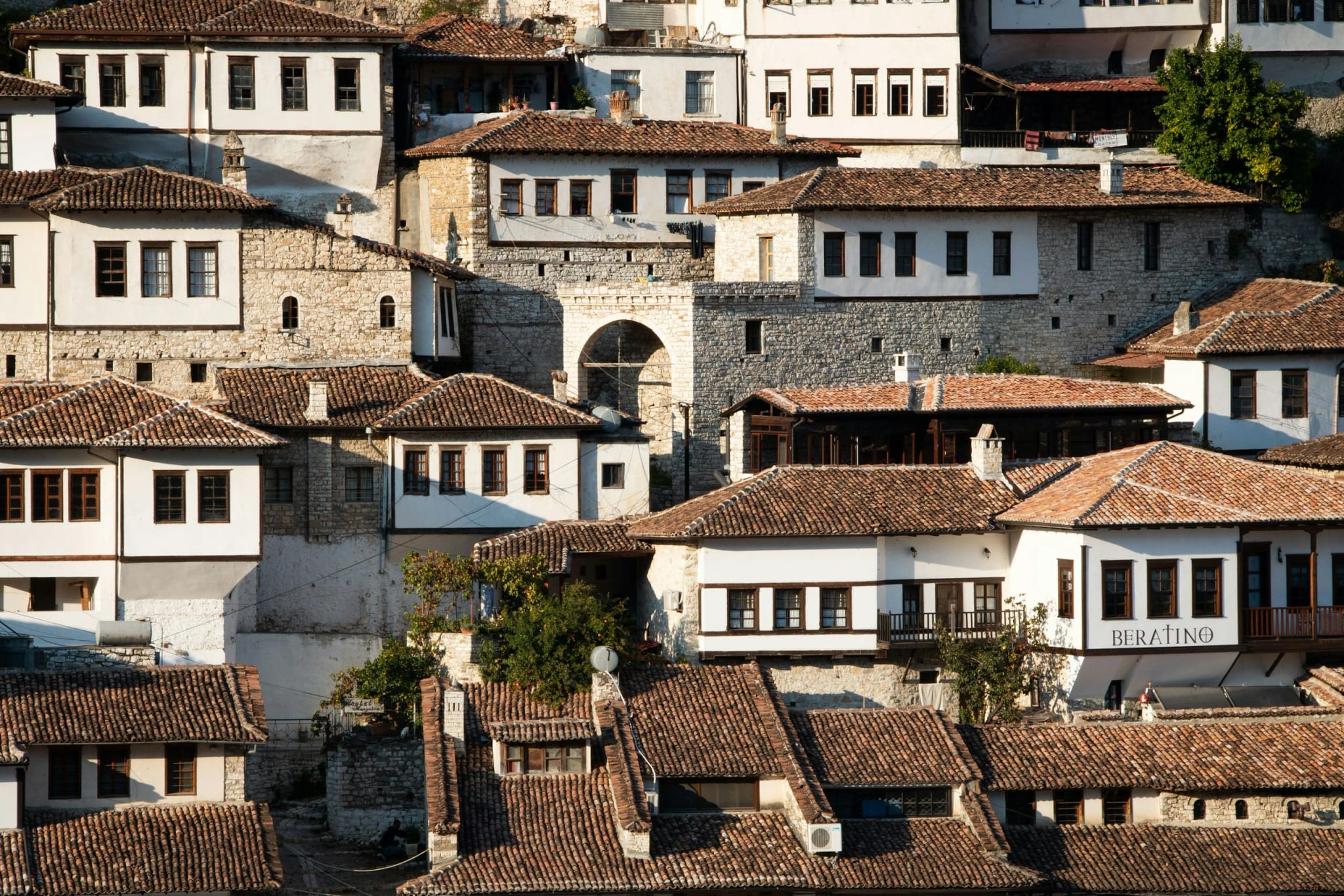
Eight days through 2,500 years of Albanian history: Skanderbeg's Krujë, Roman Durrës, the UNESCO towns of Berat and Gjirokastër, the ancient cities of Butrint and Apollonia, and the Blue Eye spring, at a comfortable pace in any season.
Albanian Alps Hiking Adventure
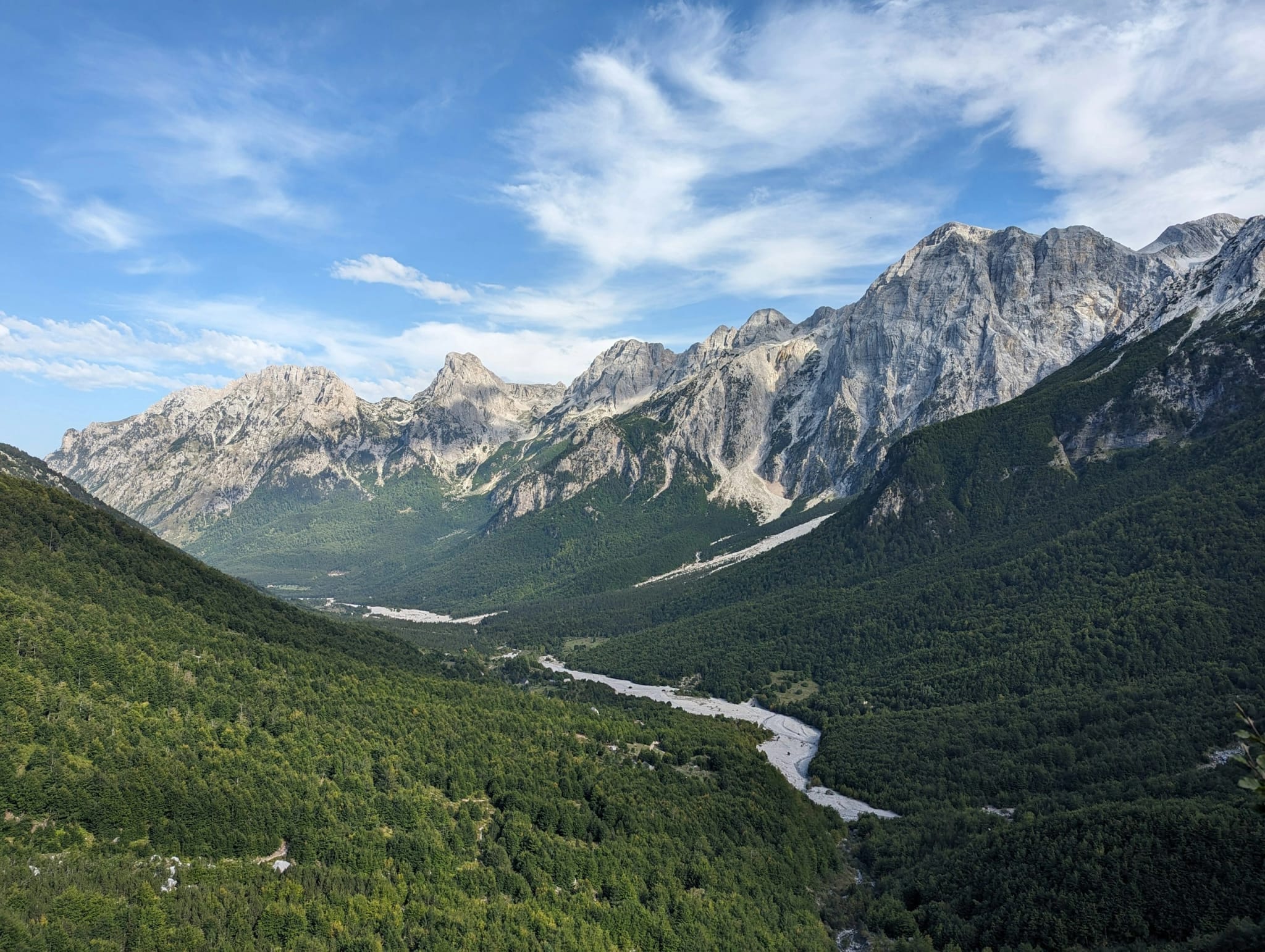
This six-day hiking journey goes into the heart of the Accursed Mountains (Albanian Alps) in northern Albania. A private boat through the Drin Gorge leads to the Valbona Valley. From there, old shepherd trails climb to viewpoints facing Mount Jezerca, the highest peak in the Albanian Alps.
See all upcoming Albania tours or the tours we run on request.
Written by
Emma Thompson
Travel Writer, Co-Travel
Emma has spent years crisscrossing Albania — from Tirana's cafés to the trails of Theth and the coves of the Albanian Riviera — to help travelers see the country the way locals do. She writes first-hand, practical guides for anyone planning their first (or fifth) trip to Albania.
Keep reading
You might also like
 Trip Planning
Best Time to Visit Albania: A Month-by-Month Guide
Warm sea, open trails, or the cheapest flights — Albania looks different every month. A season-by-season, month-by-month breakdown from someone who's visited in every one of them.
 Visas & Entry Requirements
Do You Need a Visa for Albania? Full Guide by Nationality
A nationality-by-nationality breakdown of who enters visa-free, who needs to apply in advance, and the one rule almost nobody knows about — from a travel writer who's crossed Albania's borders more times than she can count.
 Culture
Albanian Customs and Culture: What to Know Before You Visit
Besa, bottomless coffee, a raki you probably shouldn't refuse, and why nobody here is actually confused about religion — a first-hand guide to the customs that shape daily life in Albania.
 Visas & Entry Requirements
Is Albania Part of the EU or Schengen Zone? What Travelers Should Know
Albania isn't in the EU or Schengen yet, and that's actually good news for a lot of travelers — here's what its candidate status really means for your passport, your visa-free clock, and your trip.