
Culture
Albanian Customs and Culture: What to Know Before You Visit
Emma ThompsonAug 30, 20269 min read
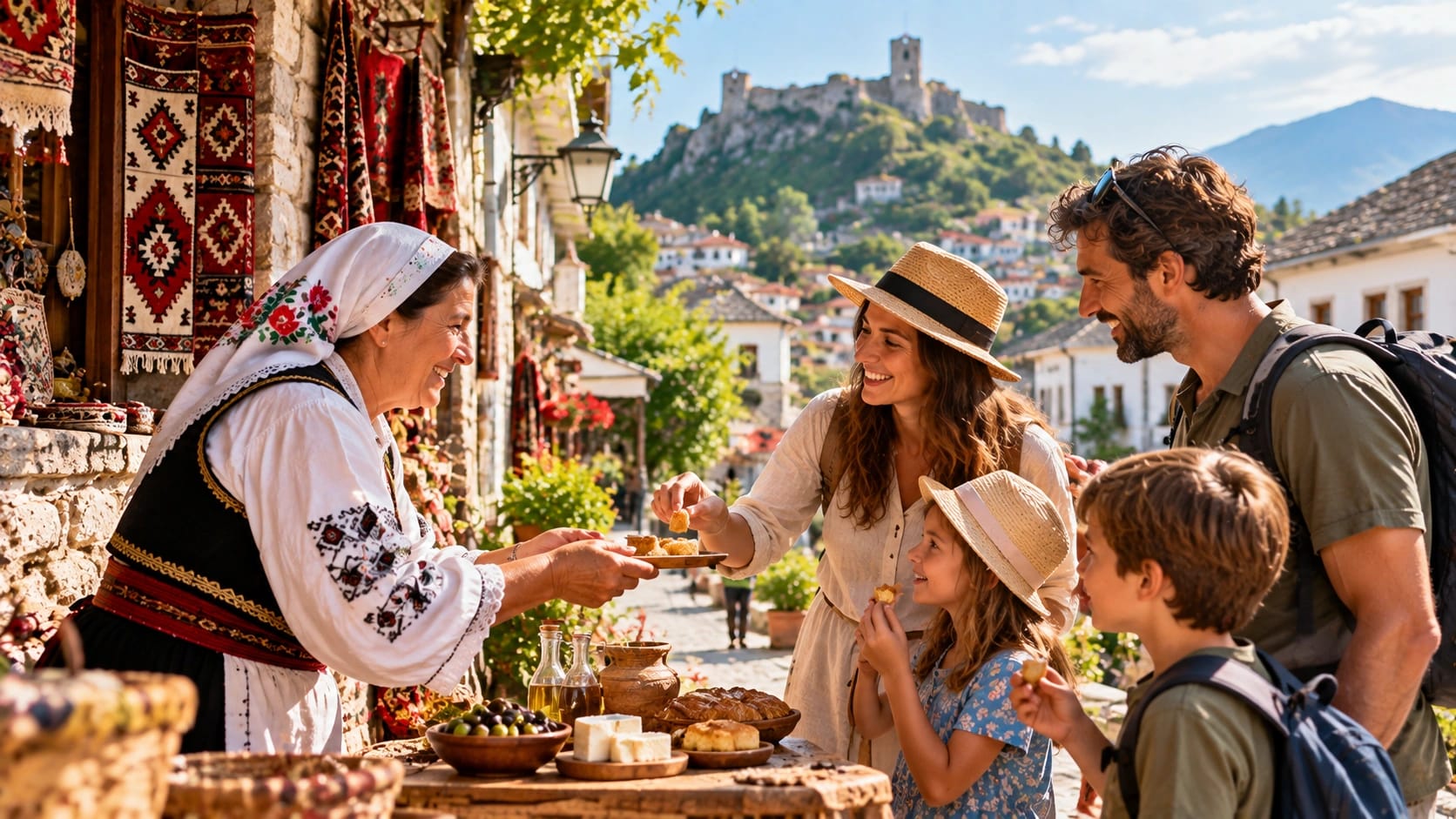
Of everything I get asked before someone's first trip here, the cultural questions are the ones I actually enjoy answering the most, because Albania's customs aren't really a list of rules so much as one underlying idea that explains almost everything else once you understand it. That idea is besa, an old word that translates loosely to "word of honor," and it's the closest thing this country has to a national religion, in the sense that it matters more to daily life here than any actual faith does. Besa is a pledge, a promise that isn't broken, and historically it extended even to protecting a stranger under your roof at real personal cost. You'll feel its modern, gentler version everywhere: in how seriously Albanians take a promise once it's made, and in a hospitality instinct toward guests that can feel almost disproportionate the first time you're on the receiving end of it.
That hospitality instinct is the thing most visitors remember longest, and it shows up constantly in the form of coffee. Espresso is genuinely the engine of Albanian social life, not an exaggeration I picked up somewhere but something I've watched play out at every level, from business meetings to neighborhood gossip, all conducted over a small cup that gets refilled long before it's empty. Turning down an offered coffee without a real reason lands as mildly rude, and the same goes for raki, the homemade fruit brandy that functions as coffee's evening counterpart, often poured before you've had a chance to ask for it. I don't drink much myself, and saying so plainly ("I don't drink alcohol") is a perfectly acceptable way out that nobody takes personally — what actually registers badly is refusing for no stated reason at all, which reads less like moderation and more like rejecting the gesture itself. If you end up invited into someone's home for a meal, the same logic applies at a larger scale: expect more food than you can finish, expect your host to quietly refill your glass before you've noticed it's low, and know that if an Albanian invites you to coffee or dinner, they almost always intend to pay, so reaching for the bill to split it tends to create more awkwardness than it resolves.
The other thing that surprises nearly everyone is how casually Albania handles religion. The population splits roughly across Muslim, Orthodox Christian, and Catholic communities, with a large non-practicing segment on top of that, and the whole mix coexists with a matter-of-factness that I've never quite seen replicated elsewhere in the region — a saying I heard early on and still like is that the real religion of Albanians is Albanianism, meaning national identity sits well above religious identity in how people actually organize their sense of self. You'll notice this most physically walking through towns like Berat or Shkodra, where a mosque and an Orthodox church can sit within sight of each other without either feeling like the exception. If you do step into a mosque or a church, the practical etiquette is simple and consistent across both: cover your shoulders and knees, keep your voice down, remove your shoes before entering a mosque, and ask before photographing the interior, especially if anything resembling an active service or ceremony is underway.
“Besa is the closest thing Albania has to a national religion, and it has nothing to do with which church or mosque anyone walks into on a Friday.”
Away from religious sites, dress code here runs mostly on common sense rather than strict rules. Beachwear stays at the beach — Albania doesn't really have a topless or nude beach culture, and walking through a town center shirtless or in a bikini reads as out of place rather than edgy. Restaurants and city centers respond well to smart-casual without demanding it, and rural areas and smaller towns generally appreciate a slightly more modest baseline than you'd bother with on the coast. None of this is unusually strict by Southern European standards, but it's worth knowing before you pack, particularly if Berat, Gjirokastra, or Shkodra's older neighborhoods are on your route.
A few smaller habits round out the picture, and most of them I only picked up by getting them wrong first. Elders are treated with a level of visible respect that goes beyond politeness — offering your seat on a furgon, letting an older person go first through a doorway, and not interrupting when they're speaking are all small things that get noticed. Photography of people, especially in markets or smaller villages, should come with a quick ask first rather than a candid shot from across the street, and it's worth steering clear of photographing anything that looks even vaguely official, like a police post or a military site. I'd also gently avoid piling excessive compliments on someone's small children in more traditional settings, an old superstition around drawing bad luck that's faded in the cities but still lingers in the villages, and it costs nothing to just admire quietly instead. And I already covered this properly in an earlier piece on language here, so I won't repeat the whole explanation, but it's worth a quick reminder in this context too: the traditional Albanian head gesture for yes and no runs backward from what you'd expect, though it's grown less consistent over the years, so a spoken confirmation is always the safer move for anything that actually matters.
On the money side of etiquette, tipping in Albania is appreciated rather than obligatory, which takes the pressure off compared to countries where it's practically mandatory. In restaurants, five to ten percent or simply rounding up to a sensible number covers it, handed over in cash directly to your server rather than added to a card payment, which often doesn't reach the person who earned it at smaller places. Taxi fares get rounded up rather than tipped as a percentage — a 350 lek fare becoming 400 is the standard, understood gesture — and guides typically see somewhere around five to ten euros per person for a half-day and closer to ten to fifteen for a full day, handed over privately and, ideally, with a handshake rather than left on a table. None of these are hard rules, and nobody will chase you down for skipping them, but a small tip handed over the right way tends to land as a genuine gesture of thanks rather than a transaction.
None of this amounts to a minefield of rules to memorize before you land, and that's really the point I try to make to anyone nervous about getting it wrong. Albanians extend an enormous amount of grace to visitors who are clearly making an honest effort, and the handful of habits that actually matter, accepting hospitality gracefully, dressing with a little more care near religious sites, tipping modestly rather than not at all, come naturally within a day or two of arriving. What I'd actually tell you to focus on is the underlying spirit behind all of it, a culture built around welcoming guests properly and keeping your word once it's given, because once that clicks, everything else falls into place on its own.
Travel it with a local team
Plan this trip with Co-Travel
See all upcoming Albania tours or the tours we run on request.
Written by
Emma Thompson
Travel Writer, Co-Travel
Emma has spent years crisscrossing Albania — from Tirana's cafés to the trails of Theth and the coves of the Albanian Riviera — to help travelers see the country the way locals do. She writes first-hand, practical guides for anyone planning their first (or fifth) trip to Albania.
Keep reading
You might also like
 Travel Safety
Is Albania Safe for Tourists? Everything You Need to Know
A first-hand guide to Albania travel safety — real crime data, common scams, driving risks, solo female travel, and the blood-feud myth, from someone who's covered the country corner to corner.
 Trip Planning
Best Time to Visit Albania: A Month-by-Month Guide
Warm sea, open trails, or the cheapest flights — Albania looks different every month. A season-by-season, month-by-month breakdown from someone who's visited in every one of them.
 Visas & Entry Requirements
Do You Need a Visa for Albania? Full Guide by Nationality
A nationality-by-nationality breakdown of who enters visa-free, who needs to apply in advance, and the one rule almost nobody knows about — from a travel writer who's crossed Albania's borders more times than she can count.
 Visas & Entry Requirements
Is Albania Part of the EU or Schengen Zone? What Travelers Should Know
Albania isn't in the EU or Schengen yet, and that's actually good news for a lot of travelers — here's what its candidate status really means for your passport, your visa-free clock, and your trip.